
Electronic Design Automation & Browser-Based Engineering
Interactive PCB & Schematic Editors
Engineering Demos
Feb 2026 – Mar 20262: schematic and PCBBrowser prototypes
JSON → interface → JSONDesign data
Look Inside
Overview
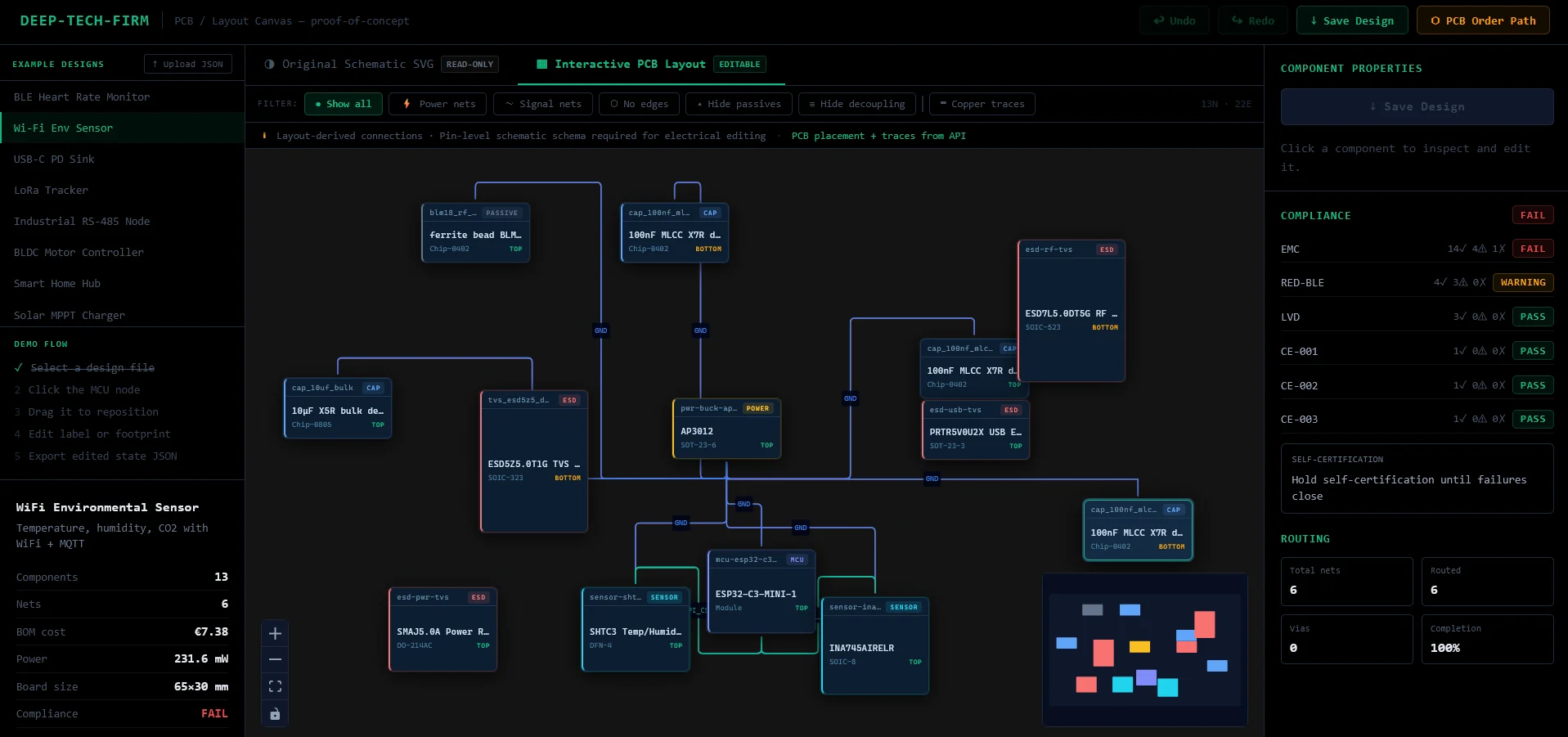
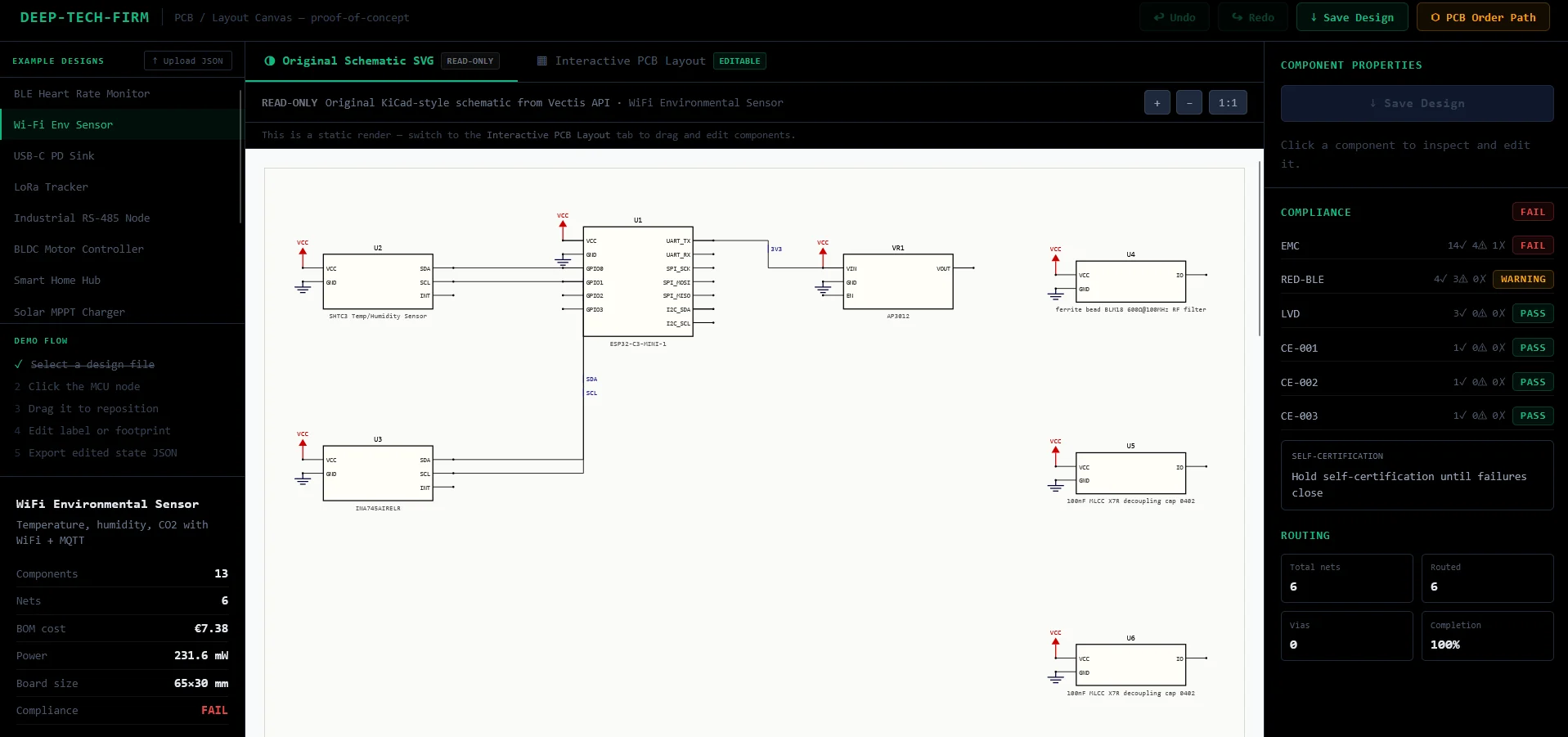
Two browser-based prototypes: schematic and PCB interaction. I built demonstration versions of schematic and PCB editors for Vectis.ai, a deep-tech electronics company developing AI-assisted hardware-design technology. The objective was to turn structured design outputs into graphical workspaces that engineers could inspect and modify.
What It Delivers
- Two working interface prototypes for schematic and PCB design review.
- Structured engineering data rendered into editable browser canvases.
- JSON-to-interface-to-JSON round-trip interactions.
- A feasible interaction layer for reviewing AI-generated electronics designs.
What I Did
- Developed interactive browser interfaces using React, Next.js and TypeScript.
- Created a schematic canvas showing components, electrical nets, connections, labels and properties.
- Built a PCB-layout view representing board outlines, placement, traces, layers and spatial relationships.
- Implemented selection, drag interactions, zoom, pan, property inspection and controlled editing.
- Parsed structured JSON design records into graphical objects and retained changes in frontend state.
- Implemented save, export and reload workflows to demonstrate round-trip design-data handling.
- Distinguished visual changes from engineering validation, flagging edits that require backend electrical checks.
- Documented the integration points for future simulation, verification and design-generation services.
Why It Matters
These were frontend demonstrations, not full EDA packages or autorouters. The engineering result was proving how complex electronic-design data could be inspected and edited in the browser without losing its structured representation.
Moving a component on screen is easy. Moving it without losing what it is connected to is the whole job.